

What should you do if you notice bleeding gums or bad breath? Many patients who notice bleeding gums, bad breath, or sensitivity often visit a dentist in North Edmonton to understand what is happening and how to manage it early. Gum disease is a common oral health problem, but it can be controlled when treated early. The key is to recognize the signs quickly and take the right steps before the condition worsens.
Gum disease often starts slowly and may not hurt at the beginning. Because of this, many people do not notice it until it starts causing problems with daily comfort and oral health. Knowing how it starts and how it can be treated helps protect your gums and teeth from long-term damage.
What is Gum Disease?
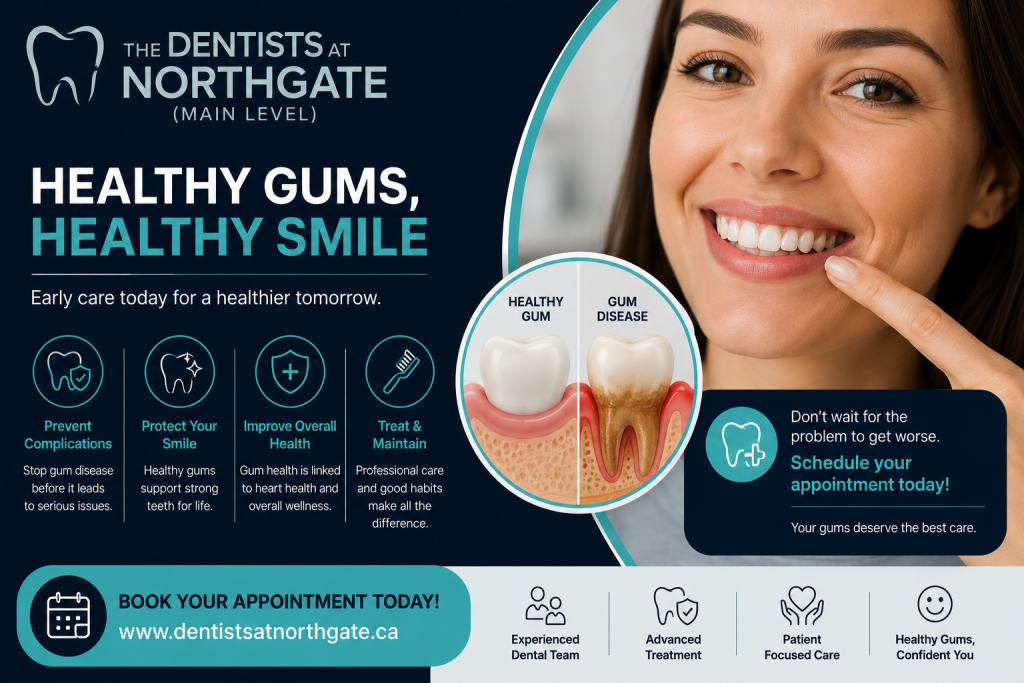
Gum disease is an infection of the gums caused by plaque buildup on the teeth. Plaque is a sticky layer of bacteria that forms on teeth after eating and drinking. If it is not cleaned well, it can irritate the gums and cause swelling.
There are two main stages:
- Gingivitis: early stage, where gums become red and may bleed
- Periodontitis: advanced stage, where gums and bone support can be affected
The earlier it is treated, the easier it is to control.
Early signs of gum disease
Recognizing the early signs can help prevent serious damage. Many people do not notice symptoms until they become more uncomfortable.
Common early signs include:
- Bleeding while brushing or flossing
- Swollen or red gums
- Persistent bad breath
- Gum tenderness
- Receding gum line
- Slight tooth sensitivity
If these signs appear, it is important not to ignore them, as early treatment can make a big difference.
Why Does Gum Disease Get Worse Over Time?
Gum disease does not go away on its own. Without proper care, it slowly progresses and affects deeper parts of the gums and teeth.
It can get worse due to:
- Poor brushing or flossing habits
- Smoking or tobacco use
- High sugar intake
- Dry mouth conditions
- Lack of regular dental visits
When bacteria stay on the teeth for a long time, they form hardened plaque called tartar, which cannot be removed by brushing alone.
How Early Gum Disease is Treated
Early gum disease, also known as gingivitis, can often be managed with improved oral hygiene and professional cleaning.
Treatment steps may include:
- Professional cleaning to remove plaque and tartar
- Improved brushing and flossing routine
- Antibacterial mouth rinses, if needed.
- Regular follow-up visits
At this stage, gum damage is still reversible with proper care.
Professional Deep cleaning treatment
When gum disease becomes more advanced, a deeper cleaning process may be needed. This is often called scaling and root planing.
This treatment helps by:
- Removing plaque from below the gum line
- Cleaning the roots of the teeth
- Helping gums reattach to teeth
- Reducing bacteria buildup
It is usually done in multiple visits, depending on the condition of the gums. After treatment, proper home care is important to maintain results.
Daily Care to Protect Gums
Having good habits every day will help you control gum disease and prevent it from returning.
Habits that help:
- Use a soft toothbrush twice a day.
- Use dental floss every day to clean between your teeth.
- If advised, utilize a gentle mouth rinse.
- Consuming adequate water helps reduce bacteria.
- Avoid smoking or tobacco products.
A few little daily tweaks can protect your gums over time.
Importance of Regular Dental Visits
Routine checkups help detect gum problems early before they become serious. A dental professional can identify signs that may not yet be visible or painful. When you visit a dentist near you, you may often discover early gum problems during routine exams, which makes treatment easier and more effective.
Regular visits also help remove plaque buildup that cannot be cleaned at home.
How to Prevent Gum Disease from Returning
Once gum disease has been treated, it is important to maintain good habits to prevent it from returning.
Ways to prevent:
- Consistent brushing and flossing should be done.
- Don’t eat too many sticky and sugary foods.
- Visit the dentist in North Edmonton regularly
- Get professional tips for oral care.
It is better to be preventive than curative.
Why Early Treatment Matters
Early treatment for gum disease helps prevent complications like:
- Gum loss.
- Tooth movement.
- Decrease in bone density surrounding teeth
- Chewing concerns.
Supports general oral comfort and helps any natural teeth last longer.
Don’t Wait for Symptoms to Get Worse – Act Early!
Gum disease is a common condition, but it can be managed effectively when treated early. Recognizing symptoms, improving daily care, and getting timely professional support are key steps in protecting gum health and preventing complications. For a detailed evaluation and personalized gum care plan, visit The Dentists at Northgate by booking your consultation.
FAQs
Can gum disease go away on its own?
No, gum disease does not go away without treatment. Early stages can improve with proper cleaning and care.
Is gum disease painful?
In the early stages, it may not cause pain. As it progresses, gums can become sore or sensitive.
What is the duration of gum treatment?
It relies on the intensity. Initial cases may resolve quickly, whereas advanced cases may require several visits.
Can you brush away gum disease?
While tooth brushing goes a long way in preventing plaque buildup, expert tooth cleaning is often required.